

~4 mins
One thing we're often asked is how to grow grass in shade. We know that it’s very frustrating to have thin grass in shaded areas, and you might be wondering what you can do differently. You might have tried seeding, fertilizing, or watering more, only to find it doesn’t seem to make any difference.
Shaded areas can be particularly challenging because several factors work against your efforts. Trees not only block vital access to sunlight, but they also tend to absorb water and nutrients before your lawn even gets a chance.
You might notice more than just thin grass in shaded areas, but also moss, weeds and entirely bare spots.
We’ve never made false promises or sugarcoated the answer. That’s why we asked our Director of Lawn Care, Grant Osvalds, about how Kingstowne Lawn & Landscape handles growing grass in shady areas.
It’s always helpful to understand what you’re dealing with when facing a challenge.
Limited sunlight is a key reason grass struggles in shade. But it’s not the only reason. Areas under trees can create conditions that make it hard for grass to grow, says Grant.
Here are some other reasons why grass struggles in shade:
Often, you can solve some of these challenges and improve the overall conditions. However, if you can’t, it may be worth considering alternatives, which we’ll cover later.
Growing grass in shade IS possible, says Grant, but it’s still important to approach the challenge with realistic expectations. Your lawn is unlikely to be as thick and lush in shaded areas as in areas that receive full sunlight and don’t have trees competing.
It’s also important to understand that all grass requires sunlight, even shade-tolerant varieties. There are no grass species that can thrive without receiving at least minimal sunlight. Most grass varieties require at least a few hours of sun per day. That means how much shade your lawn is in is an important factor.
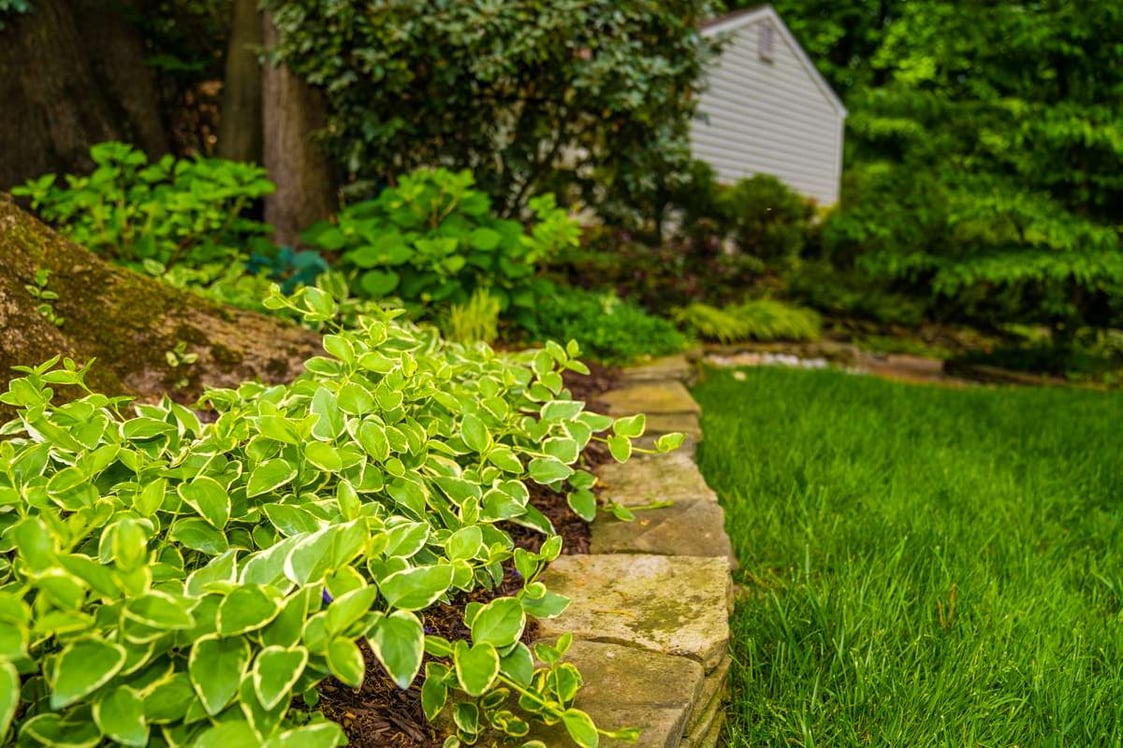
Is it heavily shaded under a dense canopy of trees and barely receives any sun all day? Or is it shaded only during certain parts of the day and still receives some sunlight? This will matter for how effective your efforts are.
Areas under trees will also need some TLC. Next, we’ll talk about what you can do to improve your odds of growing grass in shade.
Grant says there are a few things you can do to improve your success growing grass in shade.
First and foremost, use a grass type that tolerates shade. While many shade-loving grass mixes are made of ryegrass, here at Kingstowne Lawn & Landscape, we don't seed with Rye, Grant says. We use all-fescue blends, so your non-shaded areas blend nicely with the shaded ones.

We’ve also noticed that Ryegrass has a lower temperature threshold, so it starts popping up in early March, before the rest of the lawn. It’s also a slightly different color. This creates an uneven and non-uniform look, Grant says.
But if you use a more shade-tolerant fescue blend, it will still look great with the rest of your lawn.
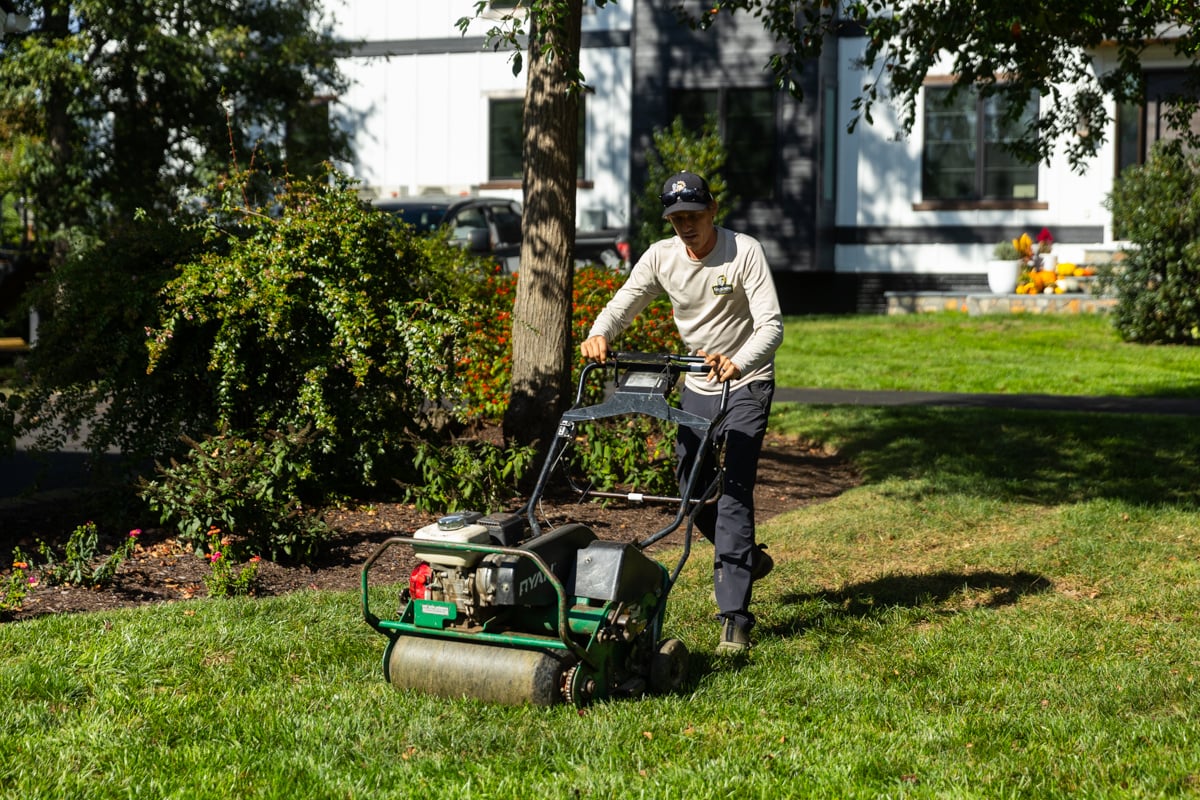
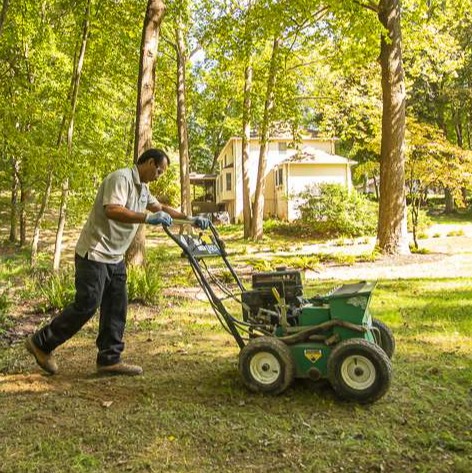
Your Northern VA lawn care efforts may need to ramp up in areas under trees. For instance, Grant says that under-tree areas might require an extra pass or two during lawn aeration to break up compaction.
Be sure to manage water carefully. As we’ve mentioned, the grass has to compete with tree roots for water, so you might need to provide supplemental watering. But areas under trees also tend to hold water, so you don’t want it to be soggy or overly saturated.
Sometimes areas under trees can benefit from a topdressing application.
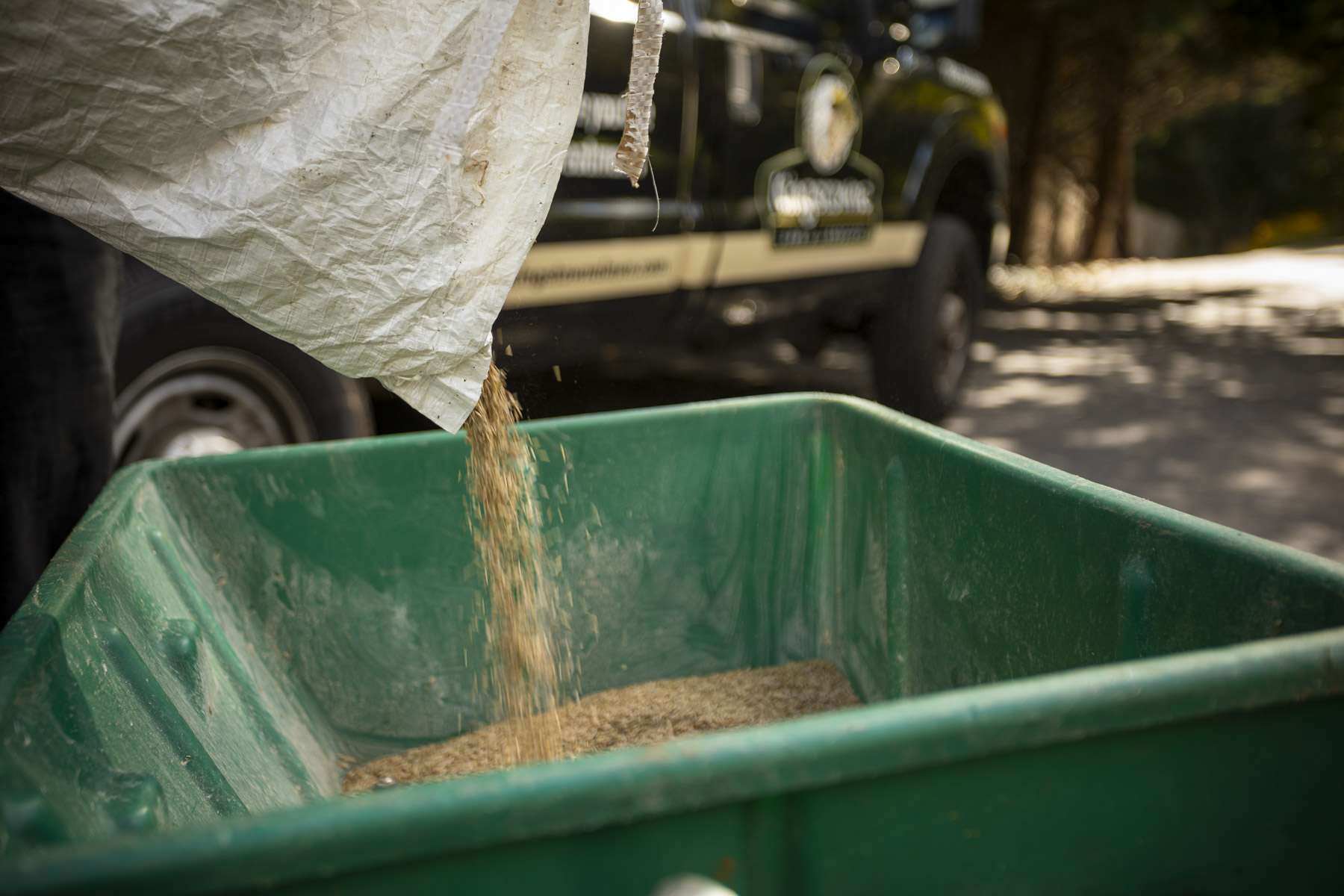
Immediately after aeration and overseeding, applying a layer of topdressing lets it fall into the holes the aerator made. As the rich compost mixes with the clay, it helps to create a healthier layer of topsoil by improving the soil structure and microbial life.
Another step that you can take to grow grass in the shade is to reduce the amount of shade in that area. Pruning trees can let more sunlight reach the lawn by selectively removing branches to open the canopy. Even indirect, filtered sunlight can help lawns to meet the sun requirements they need to thrive.
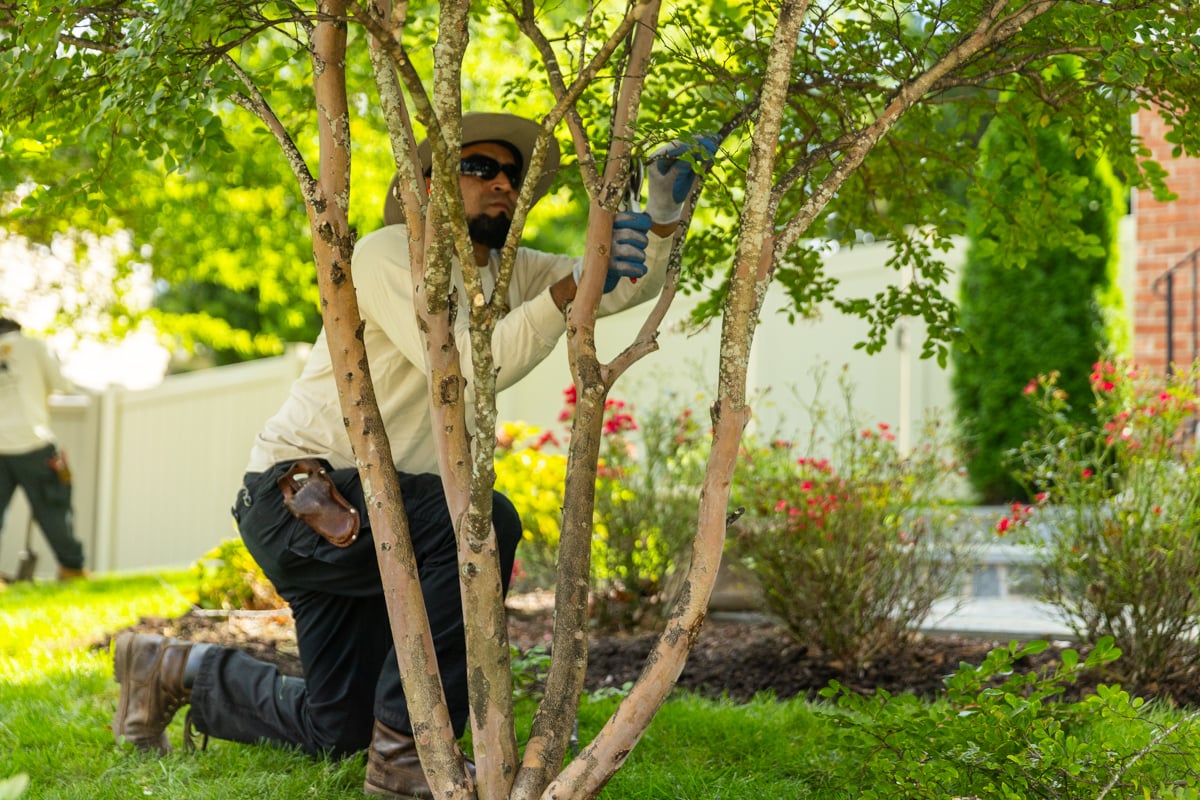
Pruning can also improve overall conditions in the area. It can allow more airflow, which helps the lawn dry out and reduces its risk of fungal issues. Pruning can also allow for more rainfall to reach the lawn.
In extreme shade, if your lawn stays thin or bare, you may need alternative solutions.
Some ways to address this include extending mulch rings, incorporating shade-loving plants, or, in the most extreme cases, removing trees. Generally, homeowners prefer to keep their trees and accept some patchy areas as a trade-off.

Grant says the hardest time for these shade spots is summer. In general, summer is hard for the lawn as a whole because of extreme weather conditions.
Why won't grass grow in shady areas of my lawn?
Grass struggles to grow in shady areas because it needs sunlight to produce energy. But lack of sunlight may not be the only problem. Areas under trees often have compacted soil and drainage issues.
How can I make grass grow thicker in the shade?
Strategies for growing grass in shade include using shade-tolerant grass types, aerating the lawn, and pruning trees to let more sunlight filter in.
What is the best grass for shady lawns in Northern Virginia?
We use a fescue blend that is more shade-tolerant than most turfgrass mixes. Fine Fescue and other blends can withstand shade better than typical seed types like Perennial Rye or Kentucky Bluegrass on their own.
Will overseeding help grass grow in shaded areas?
Overseeding alone isn’t enough in shaded areas, as other issues are often at play. You may also need to address compaction and water management.
Why does my grass keep thinning out under trees?
Thin grass in shaded areas often results from a lack of sunlight. But it could also be due to water management issues and soil compaction.
How much sunlight does grass need to stay healthy?
Most grass species require at least four to six hours of sunlight to stay healthy. Some shade-tolerant grass types can tolerate less, but still need some sun. No grass type can survive with no sunlight.
Can professional lawn care fix a thin, shaded lawn?
Professional lawn care in Northern VA can help address issues that lead to thin grass. But there is no magical fix for a heavily shaded lawn. It’s important to have reasonable expectations about what’s possible.
Growing grass in shaded areas can be complicated, so you’ll want the help of a lawn care professional.
A lawn care pro will use a comprehensive lawn care program to promote a healthier lawn overall.
Not all lawn care companies are created equal, and some will not put in the time or effort to create customized solutions; instead, they'll treat every lawn the same. This simply won’t work, since different problems require different approaches, especially if you have specific issues like shady spots.
By choosing wisely, you can feel confident that you’re taking the right steps to get your lawn problems under control and your lawn on the path to optimum health.
If you’d like to stop worrying about lawn problems and are ready to hand your lawn over to a company you can count on, request your quote and relax as you get the royal treatment.


Since its founding, Krisjan has led Kingstowne Lawn & Landscape with a straightforward philosophy: treat every customer like the “only” customer. His passionate pursuit of excellent customer service has led to 28 successful years and a thriving company with over 85 employees. Since 1997, Kingstowne has helped thousands of homeowners in the Alexandria, Arlington, and Springfield, VA area get what they want - a worry-free property they can be proud of.
Keep Your Lawn in Shape (Even in the Shade)
We can't wait to hear from you.