

~4 mins
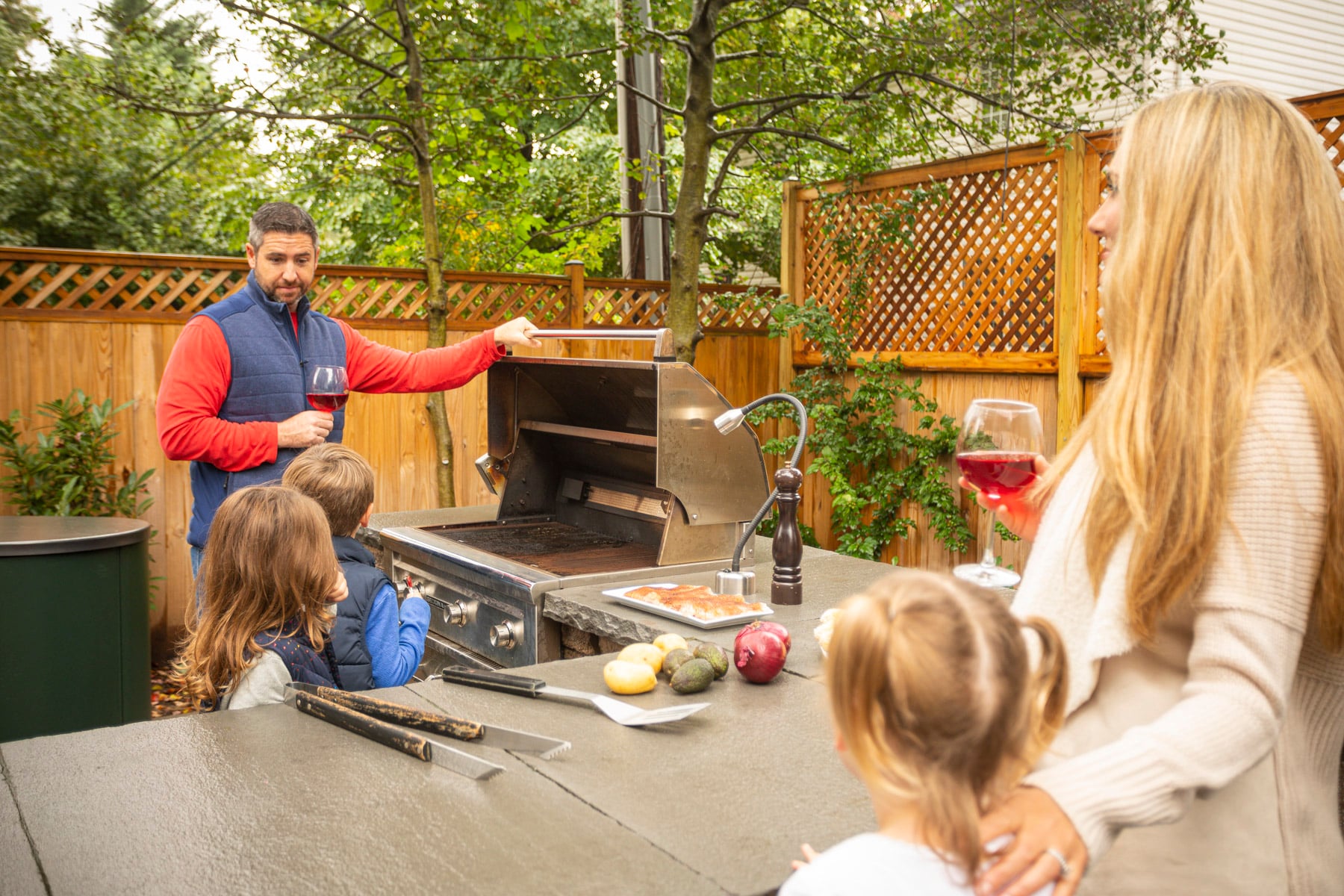
If you have a family, you might be wondering how to create a backyard design everyone will love. A great family backyard doesn't have to look like a playground, and an attractive outdoor living space doesn't have to be off-limits to kids. It might feel like a tall order, but it’s completely achievable.
With thoughtful planning, you can create a beautiful outdoor space that feels sophisticated while still giving children room to play.
In this guide, we’ll dive into family-friendly backyard design ideas to help you create a space everyone can enjoy. The key is to balance style with function.
To round up adult-approved, kid-friendly backyard ideas, we turned to Alan Macbeth, Senior Landscape Designer. He’s designed spaces for many Northern Virginia families over the years and has great ideas you can use for your own space.
Starting an outdoor living space should always begin with a landscape design in Northern Virginia. Developing that design means considering how you’ll use the space.
For a family with children, some of the factors that you might consider during the design process include:
How you currently use the space and how you’d like to use the space is always a great starting point, says Alan. With families, it’s always taken into account that wants and needs will change over the years.
This is a big question many families ask. They want backyard landscaping for their Northern VA home that their kids will enjoy spending time in, but they still want it to be beautiful.

Alan says that this is completely achievable, but there’s a lot to consider. He put together the following list of kid-friendly backyard ideas that don’t compromise on style. Keep a few key considerations in mind.
Choose plants selectively: If you’re adding plantings within or around the play space(s), choose plants that are resilient and non-toxic.
Think about what will complement the space: Choose structures or equipment that fit your desired design, rather than making the entire backyard feel like a play area. Consider materials, colors, finishes, and even placement that coordinates with the space (and your home) as a whole.
Know your kids: Understand that kids with an adventurous streak will want to climb and explore. With that in mind, ensure elements can not only withstand this time of exploration but also endure it. An example is the ever-loved stacked stone wall. Homeowners ask for these to be incorporated into their spaces all the time, but they can also be very enticing for kids to want to walk on them, so perhaps in instances like this would do a hidden mortar, allowing to retain the ‘dry stacked’ look but having the integrity and strength to accommodate being walked on.
Take precautions: Keep walls within safe fall heights, or add safety features like railings for taller walls. Also, consider the surfaces on either side of a wall and how you can make them a softer landing, such as lawn or mulch.
Use screening to your advantage: Create a physical divider that can serve as both a structural element for the garden and a way to soften what some might consider a negative view of toys left around the yard. You can also use screening to keep unwanted eyes off of your children as they play in the yard.
Create or provide storage areas: This can encourage responsibility and cleanup at the end of the day. Provide a place where toys can last longer by keeping them out of the elements, and keep the space looking clean when it's not in use.
Consider using natural materials: Materials like wood can blend in with other elements on-site, rather than some of the wildly colored plastic play equipment out there. It all boils down to personal style and what does or doesn’t work for you.
When creating outdoor living spaces for families, it’s common to have different zones for different activities. Homeowners often want active play areas where kids can kick a ball or run around, separated from spots where adults might be hanging out or where hazards are present.
Using zones can also keep kids safe, says Alan. Family-friendly landscape design considers how to keep kids out of potentially harmful areas, such as away from features like fire pits. Creating zones can help prevent kids from tripping and falling or ending up in unwanted locations.
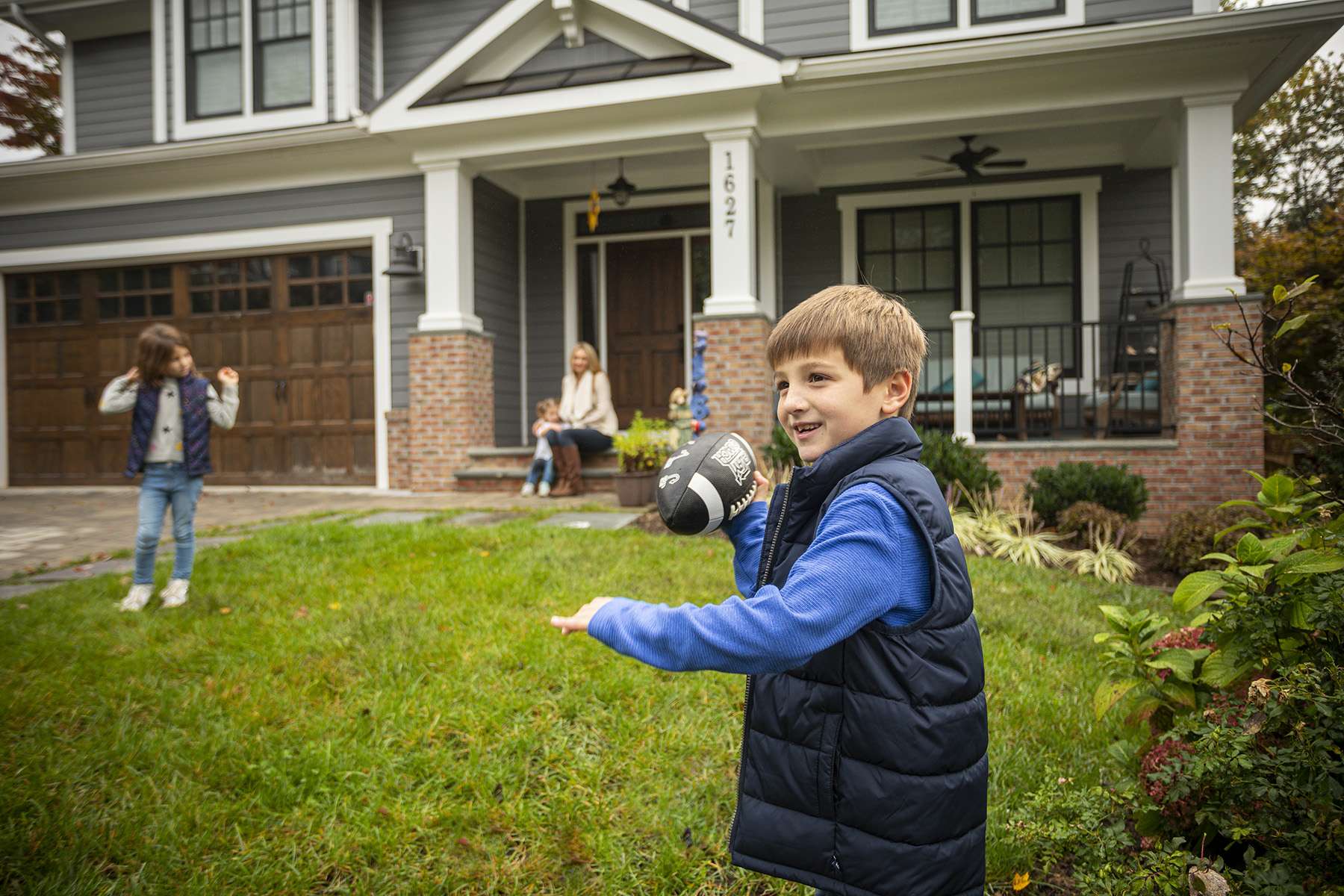
But it doesn’t necessarily have to be all separated. Alan says spaces can often (and should) do double duty.
As with any design, Alan says you can create zones based on objectives.
“For instance, you may have a patio or deck space for lounging and entertaining that could also accommodate impromptu play,” he suggests. “Perhaps a tent or structure could be temporarily set up on it, or perhaps patio areas or walkways can be used to ride wheeled toys (like balance bikes, small bikes, scooters, etc.).”
Alan says that green spaces can also be inviting to kids and great areas to explore, if parents are open to it. Children’s-specific garden areas can be a place for kids to experiment with planting, growing, and harvesting.
With kids, lawn space is also a big one. It is an important element for adults but also a space for sports games like soccer and lawn games. Let it do double-duty, says Alan.

Many Northern Virginia homes also border wooded areas.
“These make an excellent spot for ready-made play-specific structures such as placing fallen logs to walk on, creating a nature walk, adding the classic rope swing, or, if really lucky, some great climbing trees,” Alan says.
Many of the best low-maintenance ideas come down to using materials that can handle heavy use.
Synthetic turf can be a good choice for a dedicated area of the backyard as it addresses the issue where a natural lawn may struggle due to heavy play and/or pets, says Alan.
“It doesn’t require constant watering, mowing or fertilizing, and there are no dead spots if your pet were to use it as an occasional bathroom or toys/structures are set on it for longer periods,” he says. “It’s not an inexpensive venture but one that can be justified in many cases.”
While decorative gravel can look wonderful for walkways or patio terraces, it can also become an enticing area for kids to dig and displace. Choose walkway and patio materials that combine low maintenance, aesthetics, and functional play.
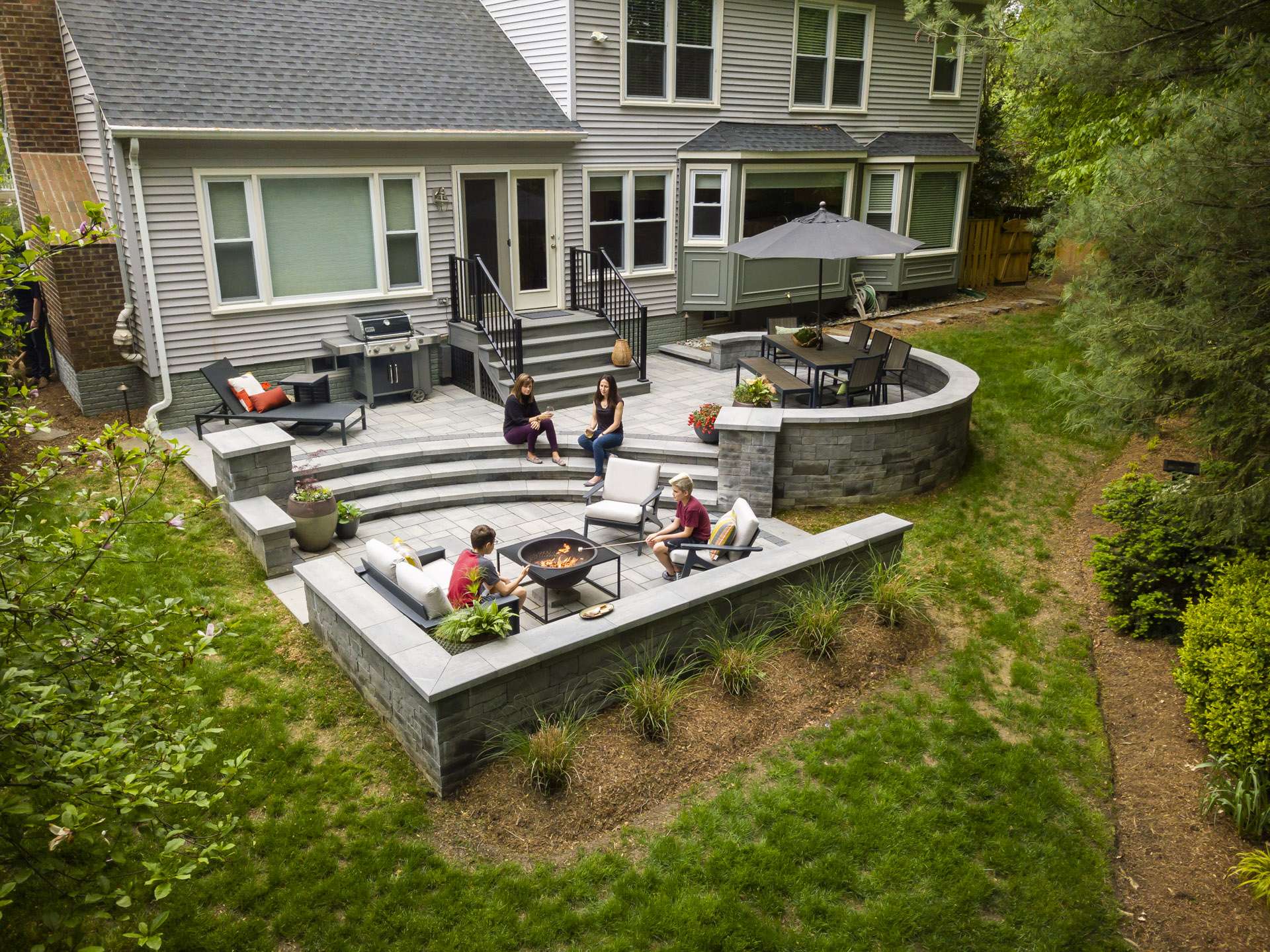
“This could include, but isn’t limited to, concrete surfaces, pavers, or even wood and composite materials for decks,” says Alan. “Composite materials eliminate splinters and the need for ongoing sealing or staining.”
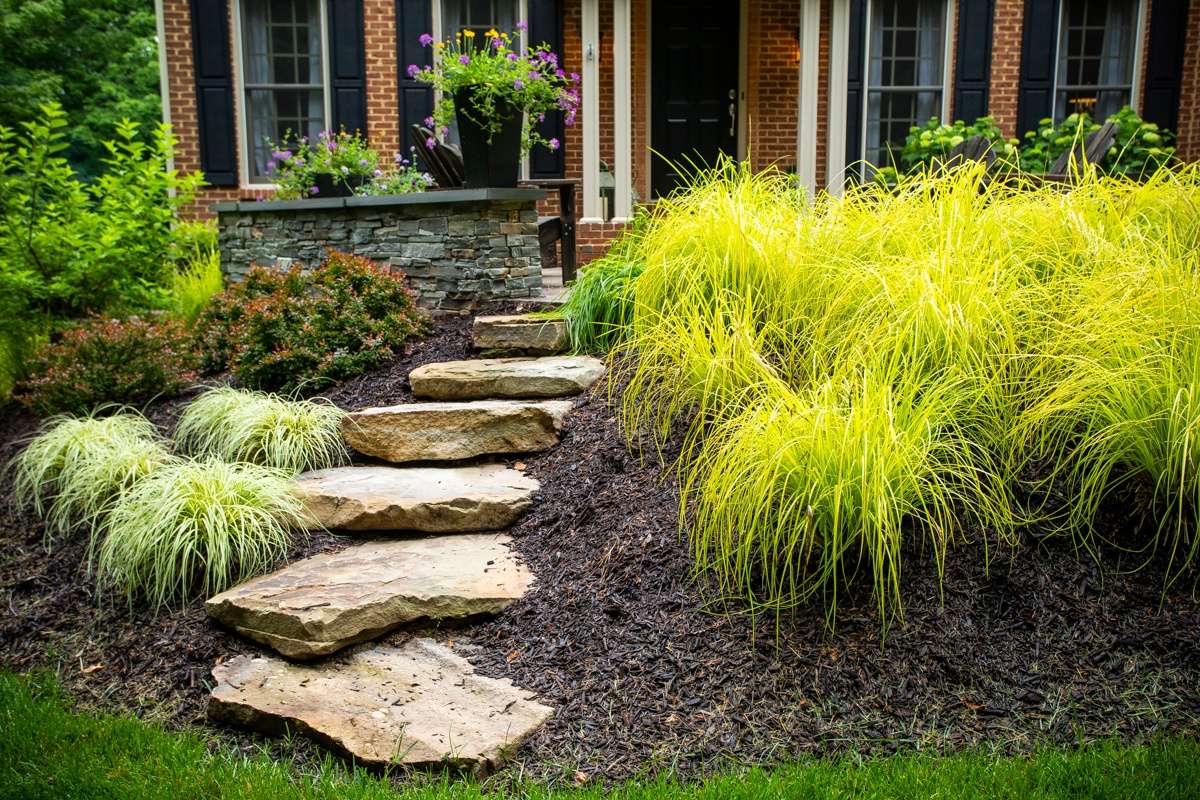
Incorporate resilient shrubs, perennials, and ornamental grasses that can tolerate an active household without requiring constant attention. Avoid overly delicate landscaping, like high-maintenance plants or elaborate garden beds, which simply aren’t practical in play areas.
Northern Virginia offers many native plant options that work well.
How do I design a backyard for both kids and adults?
As with any “custom” space design, it all starts with the size of the space in question. At Kingstowne Lawn & Landscape, we also review your design questionnaire responses to understand how you want to use the space and how many people will be using it. Based on these preliminary responses, we review the space to see how we can create zones or areas, then tailor each one.
What makes a backyard family-friendly?
A family-friendly backyard balances safety and enjoyment. Especially with very young children, it’s important to locate play areas within sightlines so that parents can always monitor and ensure safety.
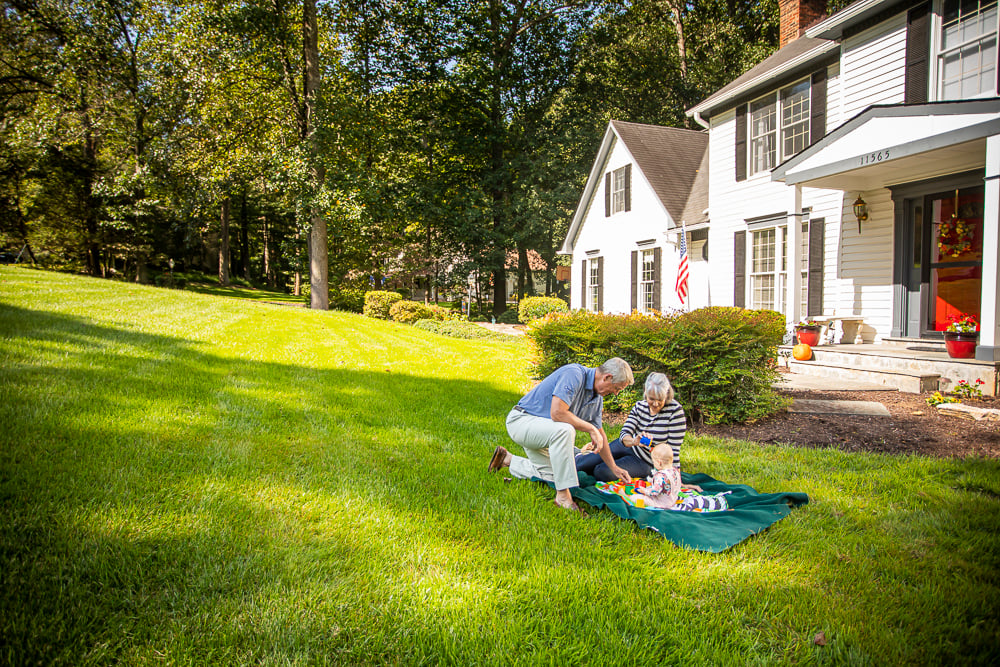
A family-friendly design also avoids plants with large thorns or needles, as well as toxic plants. It also creates zones to keep young children away from hot items such as fire pits or grills.
How can I design a backyard that grows with my kids?
Avoid costly permanent structures or overspending to develop a specific area for what often turns out to be a short period of time or use. Instead, create areas where you can use temporary or semi-permanent structures. When designing a space, always see it as having two or more uses. Or think about how a current use can easily change into something new. The key is flexible spaces that can adapt and grow as your kids do.
What are the best low-maintenance backyard ideas for families?
Many of the best low-maintenance ideas come down to materials. Durable hardscape surfaces and even synthetic turf can handle heavy wear and tear and rough play. This also works well for families with pets.
Creating a space where you can spend more meaningful time with your family in the yard is an incredibly valuable endeavor. And we want to help you make it a reality.
Hopefully, this article has given you ideas to brainstorm as you consider backyard landscaping in Northern Virginia. By working with a landscape professional in Northern Virginia, you can take the burden off your shoulders and let them help.
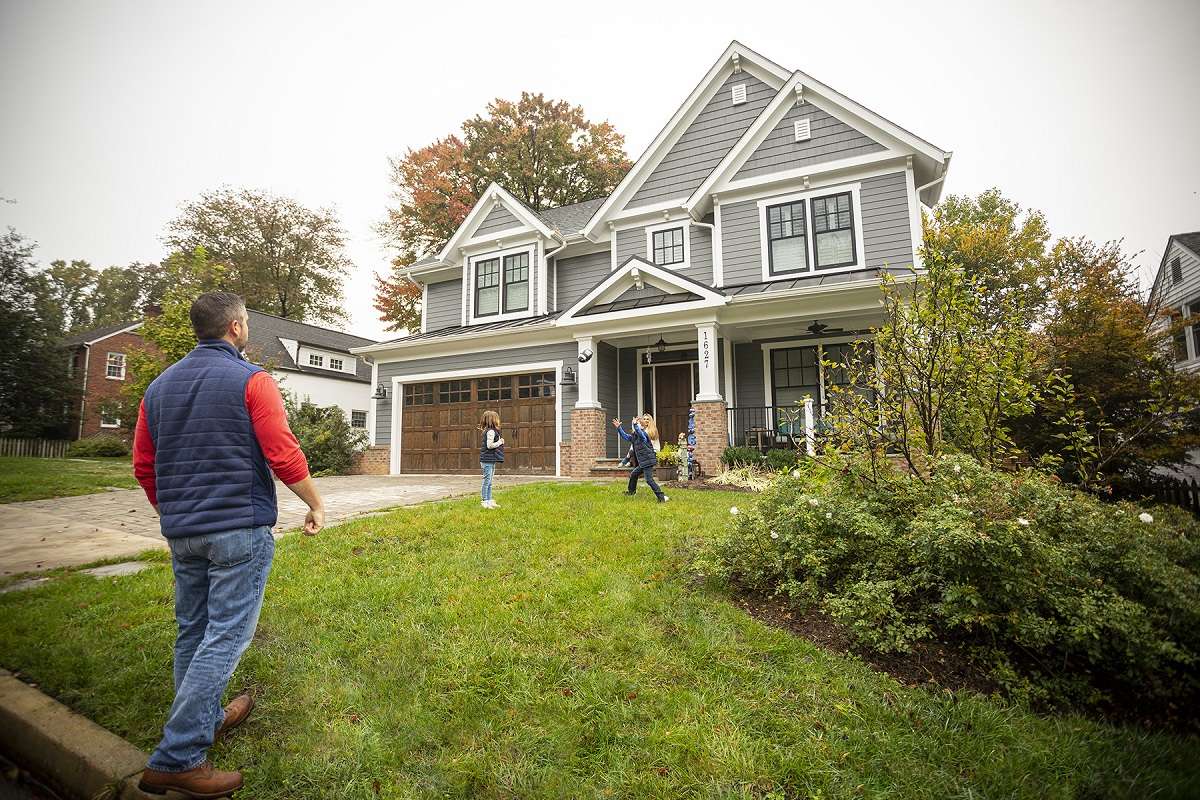
They can mesh your ideas with their expertise and experience for a custom result.
At Kingstowne Lawn & Landscape, we have the experience and know-how to handle projects like these and more. We are ready to help you get exactly what you want and need for your backyard landscape design.
Are you ready for an outdoor living area that helps you enjoy your time to the fullest at your Alexandria, Arlington, or Springfield, VA home? If so, request your consultation, get your customized plan, and relax as you get the royal treatment.


Since its founding, Krisjan has led Kingstowne Lawn & Landscape with a straightforward philosophy: treat every customer like the “only” customer. His passionate pursuit of excellent customer service has led to 28 successful years and a thriving company with over 85 employees. Since 1997, Kingstowne has helped thousands of homeowners in the Alexandria, Arlington, and Springfield, VA area get what they want - a worry-free property they can be proud of.
Build the Backyard Everyone Will Love
We can't wait to hear from you.